Shoulder: Steps to Success · with Jo Gibson

Become your clinic's go-to clinician for shoulder pain

A step-by-step, evidence-informed approach to assessing, diagnosing and treating shoulder pain, from Jo Gibson of the Liverpool Upper Limb Unit. Join 5,000+ therapists worldwide getting better patient outcomes.

core modules, plus bonus modules
12core modules, plus bonus modules
live Q&As a year with Jo
4live Q&As a year with Jo

A simple assessment that tells you exactly what is causing your patient's shoulder pain and how to treat it, without having to perform a lot of tests that just confuse you and your patient.

The curriculum

12 core modules guiding you step by step through shoulder assessment, diagnosis and treatment

From building foundations and a structured assessment, through stiff, irritable and torn shoulders, the spine and the ACJ, to communication and real-life case studies. Taught by Jo Gibson with demonstration videos, handouts, research and MP3 audio throughout, whether you're a new graduate or an experienced clinician.

Module 00
Jo Gibson· 12m

Handout, references, learning aims & objectives

Download the course handout, learning aims and reference list before you start.

The complete course handout, learning aims and objectives, and the full reference list, plus a recording of Jo teaching improvement tests to registrars.

1 presentation
Slide to browse
  • Registrar teaching improvement tests
Module 01
Jo Gibson· 52m

Simple & effective steps to success: Building foundations

Clarify what successful shoulder treatment looks like, and the steps that get you there.

In Module 1 you'll clarify how to treat shoulder pain successfully and what steps to take to get there, with the key messages from the latest evidence so you can focus on the factors in your assessment and treatment that improve outcomes.

You'll discover how long it will take your patients to get better, and how they can have long-term success with their shoulder pain.

In this module you'll
  • Understand the challenges and limitations of special tests and imaging.
  • Know whether we can diagnose anything or not.
  • Discover a simple, structured, evidence-based approach to assessment and prognosis.

By the end of Module 1, you'll have a solid foundation and a clear action plan to improve your treatment results.

3 presentations
Slide to browse
  • Goals
  • Steps to success - Building foundations
  • Practical tips
Module 02
Jo Gibson· 1h 38m

Rotator cuff & scapula: Rockstars or support act?

A simple, structured assessment that quickly and clearly guides your treatment.

In Module 2 you'll learn to use a simple, structured assessment that quickly and clearly guides your treatment, so you confidently target the right areas with your treatment and rehab program.

You'll also
  • Understand the pathology and function of the rotator cuff and scapular muscles, their relevance in shoulder pain, and how this impacts your assessment and treatment.
  • Enhance your exercise selection from the start, using symptom modification in an evidence-informed approach.

At the end of this module, you'll know when, where and how to target the rotator cuff and scapula in your rehab programs.

15 presentations
Slide to browse
  • Goals
  • Understanding muscle function to inform assessment & treatment
  • Assessing the rotator cuff in isolation
  • Using assessment findings to inform exercises
  • Is it all over for the scapula: What you really need to know
  • Improvement tests: Understanding key principles
  • Patient example 1: How did you do?
  • Patient example 2: How did you do?
  • Applying the principles to the irritable shoulder
  • Using improvement tests to inform exercises: Part 1
  • Using improvement tests to inform exercises: Part 2
  • Using improvement tests to inform exercises: Part 3
  • Using improvement tests to inform exercises: Part 4
  • In defence of symptom modification: Lets be sensible
  • Practical tips
Module 03
Jo Gibson· 1h 24m

Movement for improvement: Integrating the chain for the gain

Bring the kinetic chain into rehab to improve pain and performance for every patient.

In Module 3 you'll make rehabilitation easier for your patients by incorporating the kinetic chain into rehab to improve pain and performance in athletes, active patients and more sedentary, older patients.

You'll also
  • Quickly and easily assess the kinetic chain, and identify when to include it in your patient's rehab.
  • Get tools and strategies that help your patients return to work, function and sport.
  • Motivate patients with new exercises that immediately and consistently improve pain and function.

By the end of this module, you'll have the tools you need to include the kinetic chain, and to motivate your patients to get stuck into their shoulder rehab exercises.

13 presentations
Slide to browse
  • Goals
  • The kinetic chain: Understanding key principles
  • Incorporating the kinetic chain in improvement tests
  • Assessing the impact of hip recruitment on shoulder strength
  • Incorporating the kinetic chain in shoulder exercises
  • Adding the kinetic chain to shoulder exercises
  • Emphasising the kinetic chain in elevation exercises
  • Increasing the contribution of the kinetic chain
  • Incorporating gluteal strengthening to shoulder exercises
  • Using the kinetic chain to promote scapula protraction
  • Emphasising the thorax to influence shoulder function
  • Applying kinetic chain principles for our older patients
  • Practical tips
Module 04
Jo Gibson· 1h 18m

Is it torn and does it matter?

A simple assessment of structural pathology, and which special tests actually help.

In Module 4 you'll master a simple assessment of patients with shoulder pathology such as rotator cuff tears, and clearly identify when your patients should start conservative management, or will benefit from investigations or an early surgical opinion.

You'll also
  • Identify which special tests provide useful information, and which tests you can leave on the scrapheap.
  • Understand structural pathology, when it matters, and when it's just a blip on the radar.

By the end of this module, you'll be able to quickly assess structural pathology and decide with your patient on the best treatment pathway.

6 presentations
Slide to browse
  • Goals
  • Is it torn and does it matter?
  • What about labral tears?
  • Applying improvement test principles to special tests 1
  • Applying improvement test principles to special tests 2
  • Practical tips
Module 05
Jo Gibson· 1h 37m

Stuck on the stiff shoulder? Sleuthing and solutions

Diagnose and treat frozen shoulder, osteoarthritis and other stiff, painful shoulders.

In Module 5 you'll learn how to improve your results with frozen shoulder, osteoarthritis and other stiff and painful shoulders: accurately and efficiently diagnose your patient's pain, and use targeted treatment, exercises and manual therapy for maximum effect.

You'll also
  • Explore common causes of shoulder stiffness, including frozen shoulder, osteoarthritis, avascular necrosis, posterior dislocation and more.
  • Understand which injections will help improve pain and function in each of your stiff shoulder patients.
  • Know when to refer your patients for an injection, and how to combine this with your rehab program and manual therapy.
  • Use effective, evidence-based manual therapy that can improve range and pain in your patients.

By the end of this module, you'll know exactly how to assess, diagnose and treat shoulder stiffness, and get your patients quickly onto a pathway to recovery.

18 presentations
Slide to browse
  • Goals
  • Is it stiff?
  • Assessment of the stiff shoulder
  • Manual therapy to target ER in neutral
  • Manual therapy to target ER in abduction
  • Home stretches to target ER in neutral
  • Home stretches to target ER in abduction
  • Eccentrics to improve ROM
  • Using the kinetic chain to increase range
  • Mobilisation with movement to help increase ER range
  • Mobilisation with movement to facilitate elevation
  • Manual therapy to target IR neutral
  • Manual therapy to target IR in abduction
  • Home stretches to target IR in neutral
  • Using eccentrics to improve IR in abduction
  • Using eccentrics to improve IR in neutral
  • Working the muscle system through range - IR & extension
  • Practical tips
Module 06
Jo Gibson· 1h 37m

Calming the irritable shoulder

Identify the cause of acute shoulder pain, and calm it down.

In Module 6 you'll quickly and confidently identify the cause of your patient's acute shoulder pain, and how to calm it down.

You'll also
  • Diagnose common causes of acute shoulder pain, including rotator cuff tendinopathy, frozen shoulder, calcific tendinopathy and three other diagnoses that each require different assessment and treatment.
  • Use exercises and manual therapy to effectively improve pain and range of movement.
  • Have options when your patient is reluctant to move and symptoms are unchanging.
  • Know when to refer your patient for an injection.

By the end of this module, you'll have strategies you can use straight away to quickly diagnose and calm your patient's acute or irritable shoulder pain.

11 presentations
Slide to browse
  • Goals
  • The irritable shoulder: Getting to grips with diagnosis and treatment
  • Supported isometrics - A useful tool when all else fails
  • Targeting long head of biceps: Eccentrics and isometrics
  • Unloading the irritable shoulder: Exercise options
  • The irritable shoulder: Using compression
  • Taping the irritable shoulder
  • Manual Therapy - Using distraction to modulate pain
  • Pain predominant frozen shoulder: Treatment options
  • Calcific tendinitis: Just another irritable shoulder?
  • Practical tips
Module 07
Jo Gibson· 1h 29m

Robust, resilient and ready? Optimising outcomes with strengthening

Which strengthening exercises make the biggest difference, and how to build them up.

In Module 7 you'll use strength training to accelerate your treatment results, harnessing the most effective strengthening exercises to improve your patient's pain: where to start, and how to build them up.

You'll also
  • Sort the good from the great, and find out which strengthening exercises will have the biggest impact on your patient's pain.
  • Know when to use strengthening exercises, and when your patients need a different approach.
  • Build your patient's strength so they become robust, resilient and ready for life's challenges.

By the end of this module, you'll have the strengthening tools and knowledge you need to set your patients on the path to a speedy recovery.

11 presentations
Slide to browse
  • Goals
  • Key principles: Using the kinetic chain to promote muscle recruitment
  • Using the kinetic chain to promote muscle recruitment
  • Using the kinetic chain to introduce load
  • Incorporating gluteal and rotator cuff strengthening
  • Using eccentrics to strengthen the posterior rotator cuff
  • Using eccentrics to strengthen the anterior rotator cuff
  • Optimising outcomes: The bigger picture
  • Improving movement habits
  • Increasing movement efficiency - Making life easier for the shoulder
  • Practical tips
Module 08
Jo Gibson· 1h 28m

When it's not a shoulder: The role of the spine in shoulder pain

Know when shoulder pain is coming from the neck or thorax, and what to do about it.

In Module 8 you'll know when shoulder pain is referred from the cervical spine, and how to design the right rehab program for cervical-driven shoulder pain.

You'll also
  • Assess and diagnose cervical spine driven shoulder pain.
  • Know how to explain pain referral and recovery timeframes to your patient.
  • Identify when the thorax is stopping your patient's recovery, and why your rehab program for the thorax needs more than mobility exercises.
  • Discover effective cervical and thoracic spine exercises you can incorporate into your shoulder rehab.

By the end of this module, your results with referred pain will set you apart from other therapists in your area.

15 presentations
Slide to browse
  • Goals
  • The role of the cervical spine in shoulder pain: Assessment considerations
  • Applying improvement test principles to cervical spine assessment
  • Cervical spine treatment
  • Manual therapy: Lateral glides to the cervical spine
  • Emphasising the cervical spine in shoulder exercises
  • Targeting the cervical spine in exercises
  • Strengthening the cervical spine
  • The role of the thorax - Stiff or a question of stability?
  • Manual therapy: Improving rotation
  • Manual therapy: Improving flexion/rotation
  • Manual therapy: Targetting thoracic extension
  • Exercises to target the thorax
  • Promoting thoracic rotation with bilateral shoulder exercises
  • Practical tips
Module 09
Jo Gibson· 1h 20m

The acromioclavicular joint: Victim or culprit?

Simple assessment, treatment techniques and exercises for ACJ pain and stiffness.

In Module 9 you'll master the treatment of ACJ pain, and shoulder pain caused by ACJ stiffness, with simple assessment and treatment techniques and exercises.

You'll also
  • Explore ACJ pathology, stiffness or mobility and pain so you can start a targeted exercise program.
  • Discover exercises for patients with an ACJ injury, to enhance their joint stability.
  • Improve ACJ mobility with manual therapy and targeted exercises when stiffness is contributing to shoulder pain.

By the end of this module, you'll have effective exercise and manual therapy strategies to improve your results with ACJ stiffness, pain and injury.

11 presentations
Slide to browse
  • Goals
  • The acromioclavicular joint: What do you need to know?
  • Manual therapy to address ACJ stiffness
  • Using manual therapy principles to inform exercise
  • ACJ Improvement test principles
  • Common injuries and pathology
  • Setting foundations: Wall squat and shrug
  • Targeting ACJ stability: Bow and arrow
  • Early ACJ strengthening: The Robbery
  • Combining strength and stability for the ACJ
  • Practical tips
Module 10
Jo Gibson· 1h 23m

Mastering massive rotator cuff tears: Beyond anterior deltoid

Rehabilitate massive rotator cuff tears with a program that goes beyond anterior deltoid.

In Module 10 you'll develop a clear strategy to rehabilitate patients with massive rotator cuff tears (MRCT), using innovative exercises guided by the latest evidence to help your patients recover shoulder strength and function, and get back to the activities they love.

You'll also
  • Discover specific tests you can use to identify patients who are likely to do well with conservative management, and who will require a surgical referral, so you can confidently choose the best treatment pathway.
  • Develop and implement an effective, tailored treatment program for your MRCT patients that goes beyond the limitations of commonly prescribed anterior deltoid programs.

By the end of this module, you'll know how to design an exercise program that gets results with your massive rotator cuff tear patients.

19 presentations
Slide to browse
  • Goals
  • Massive rotator cuff tears: A special case
  • Anterior Deltoid programme
  • Starting the deltoid programme: Targeting subscapularis
  • Starting the deltoid programme: Targeting the posterior cuff
  • Enhancing deltoid stabilising function: A case for abduction
  • Targeting remnants of the posterior cuff
  • Targeting the anterior rotator cuff
  • Targeting subscapularis + the kinetic chain
  • Finding where to start with isolated posterior cuff
  • Using mobilisation with movement principles to assist elevation
  • Unloading to facilitate range: Table slides
  • Promoting posterior cuff through range: Assisted unilateral wall slide
  • Unload to improve range: Assisted wall slide
  • Retraining movement: Using assistance to improve elevation
  • Targeting scapula protraction through range
  • Sit to stand dissociation
  • Sit to stand emphasising subscapularis
  • Practical tips
Module 11
Jo Gibson· 1h 29m

Communication is your superpower: Get it right from the start

Communication skills and language that help your patients make a full recovery.

In this crucial module you'll develop key communication skills and language to help your patients make a full recovery, building a therapeutic alliance and reaping the rewards of improved treatment results that come from skilled, effective communication.

You'll also
  • Identify and incorporate your patient's goals into your treatment, so they stay motivated to perform their exercises.
  • Discover where communication often goes wrong, and how to get back on track when patients don't fully understand your messages.
  • Identify biopsychosocial elements that hamper your patient's recovery, and effectively address these to create a successful treatment outcome.

By the end of this module, your clear communication will inspire your patients and multiply the impact of your entire treatment.

3 presentations
Slide to browse
  • Goals
  • Communication: Getting it right from the start
  • Practical tips
Module 12
Jo Gibson· 1h 16m

Real life case studies: Confident in the clinic

Apply everything you've learned to three real-life case studies.

In Module 12 you'll apply everything you've learned in the course to navigate three real-life case studies. You'll improve your clinical reasoning and build your confidence to use the Steps to Success approach with your patients, so you know exactly where to start and the key ingredients that deliver outstanding outcomes.

By the end of this module, you'll have the tools you need to confidently use this simple, structured approach and make a real difference to your patients' shoulder pain and enjoyment of life.

7 presentations
Slide to browse
  • Goals
  • Case study - Mark
  • Case Study - Ethel
  • Case Study - Sharon
  • The Steps to success journey
  • Practical tips
  • Summary & what's next?
Resources & bonuses Included with every ticket
Acute shoulder pain assessment & diagnosis

Acute shoulder pain assessment & diagnosis

In this bonus module you'll quickly and confidently assess and diagnose patients with acute shoulder pain, so you can immediately start treatment and reduce their pain.

Shoulder special tests

Shoulder special tests

Streamline your objective examination, confident that you're only performing tests that give you useful information. You'll know which special tests are helpful, and which waste your time and can be eliminated from your assessment.

Nerve injuries

Nerve injuries

Identify common nerve injuries in the shoulder, and the specific exercises you can use to target muscle recovery after nerve injury.

Wobbly shoulder

Wobbly shoulder

This bonus module looks at the current evidence on atraumatic shoulder instability and how particular presentations may influence your treatment approach.

Post-operative shoulder

Post-operative shoulder

Exercises and simple strategies you can use in your post-op shoulder surgery rehab programs to decrease post-op stiffness, improve recovery and return to sport or activity, and set your patients up for success.

Telehealth for shoulder pain

Telehealth for shoulder pain

A lecture on assessing and treating shoulder pain over telehealth, with a handout and three infographics.

Research

Research

Stay up to date with the latest evidence, with immediate access to a comprehensive selection of downloadable research articles and the full course reference list.

Infographics

Infographics

Exclusive infographics with key concepts from the course, covering ACJ assessment, the cervical spine, communication, imaging, rotator cuff and scapula assessment, and the stiff shoulder.

Q & A

Q & A

Four live Q&A sessions a year with Jo Gibson, where she tackles your toughest questions, plus the library of every previous session back to August 2018 and their handouts. Submit your questions in advance, join live, or watch the replay.

Shoulder assessment algorithm

Shoulder assessment algorithm

This flow chart summarises the simple approach to assessment described in the course and how it informs rehabilitation.

Shoulder rehab exercise algorithms

Shoulder rehab exercise algorithms

Two downloadable flow charts: one for choosing shoulder rehab exercises, and one for progressing them.

Rotator cuff tear guide & handouts

Rotator cuff tear guide & handouts

A bonus presentation on rotator cuff tears, with a therapist guide, two patient handouts covering common questions and treatment options, and a reference list.

Frozen shoulder infographics

Frozen shoulder infographics

Seven exclusive infographics on frozen shoulder assessment, diagnosis and treatment.

Shoulder assessment infographics

Shoulder assessment infographics

Infographics that summarise and guide you through shoulder assessment, from the six steps of objective assessment and types of shoulder pain through to red flags and a case study.

Solving acute shoulder pain

Solving acute shoulder pain

Become a shoulder detective as you learn how to assess and diagnose acute shoulder pain across three videos.

Exercise options & progressions

Exercise options & progressions

Your bonus exercise options and progressions handouts, a quick-reference guide for busy clinic days to keep your patients progressing smoothly and safely.

What changes in clinic

From guesswork to a clear, repeatable approach.

With the Shoulder: Steps to Success online course you'll be guided step by step through how to:

  • Assess patients easily to get an accurate diagnosis and understanding of their pain.
  • Combine targeted manual therapy with specific exercises to improve shoulder pain and movement.
  • Use exercises and exercise progressions that lead to full recovery.
  • Incorporate the kinetic chain into rehab for better pain and performance outcomes.
  • Treat a range of shoulder pathologies, including frozen shoulder, osteoarthritis and rotator cuff tears.
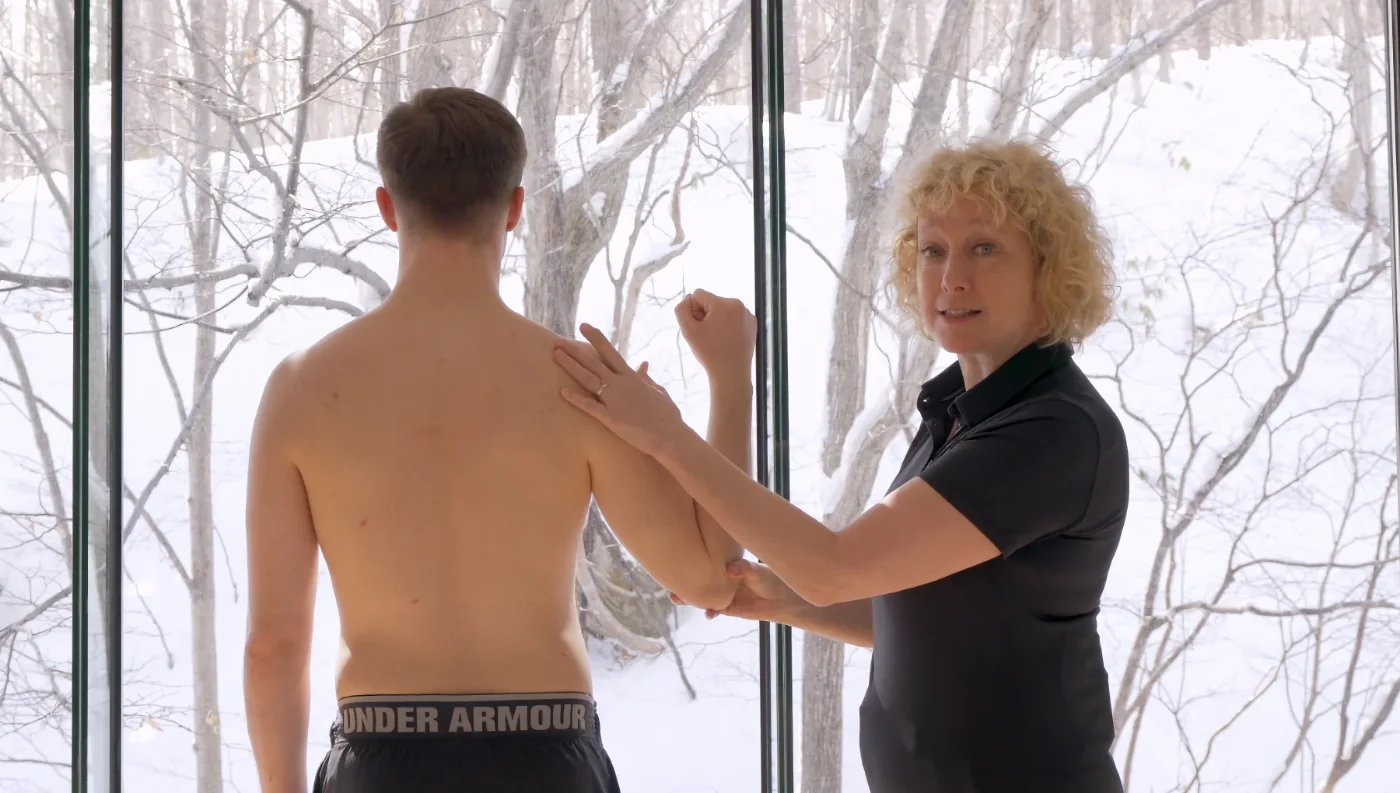
Jo Gibson assessing a patient's shoulder from behind

Feedback and testimonials from therapists who completed the course, in their own words.

Real reviews from physiotherapists, physical therapists, chiropractors and podiatrists around the world.

John KellyGP · Australia
Zoey Readdy, Physiotherapist · Perth, Australia
"I used to feel like I had a 50:50 potential to change someone's symptoms with my treatment plan. I felt like I never had a clear, systematic process. Now I feel more confident having a systematic approach to my assessment and treatment, and don't feel like I'm guessing and hoping for the best. The objective assessment and symptom modification tests, as well as utilising the kinetic chain, have been so simple and easy to follow. I feel very confident now, and the course has completely changed the outcome of my patients."
Zoey ReaddyPhysiotherapist · Perth, Australia
Denzil Jewell, Physiotherapist · New Zealand
"Before the course, figuring out the best and most efficient assessment and subsequent intervention plan from my assessment was a real challenge. In the course Jo provided plenty of evidence to support the often complex presentation of shoulder pathologies, in an easy to understand and practically applicable manner that I was able to instantly use in my clinical practice. I have noticed a tremendous improvement in my ability to diagnose and design tailored interventions for all patients who present to me with shoulder pain. This is easily the best shoulder course I've done, both practically and online."
Denzil JewellPhysiotherapist · New Zealand
  • Before the Shoulder: Steps to Success online course my assessments were a mess of special tests which I now know are largely meaningless. I lacked ideas for rehab exercises beyond isometric rotator cuff strength and maybe theraband resisted abduction. The course has completely altered my approach and I no longer spend ages with multiple tests. The improvement tests in the course were a revolution for me. I'm now hugely more confident with both assessment and treatment of shoulder pain, and usually get very good results.
    Helen GreensmithPhysiotherapist · UK
  • As a new grad before taking the course, I was stuck on trying to diagnose a specific structural deficit, but then also giving everybody pretty much the same exercises. The simple clinical reasoning framework Jo teaches is so powerful at changing people's movement experience in session. I'm now less concerned about structural diagnosis, and have a way better capability to screen those specific pathologies that do need diagnosing. I also have a way better foundational understanding of how the rotator cuff works, which guides everything I do.
    Mary CarstensPhysiotherapist · Canada
  • Before doing the Shoulder: Steps to Success online course, there were so many aspects to shoulder pain that it seemed overwhelming, and I used to use more of a blanket treatment for most shoulder pain patients. The course with Jo is broken down into easily digestible bits which makes it easy to remember and implement. I now feel much more confident in accurately diagnosing shoulder pain, communicating this to the patient and knowing how to treat and prescribe rehab exercises. My treatment is now more targeted depending on the shoulder injury rather than a blanket shoulder treatment.
    Jennifer RichardsonOsteopath · Australia
  • The shoulder felt like a complicated joint before doing the Shoulder: Steps to Success online course. I was not able to put an accurate diagnosis on the pathology I was facing, therefore not proposing adequate rehab. The videos of the exercises, quality of the information provided, backed up by recent research, has really helped me and is easily applicable in clinic. My ability to take care of shoulder patients changed completely, I feel way more confident. I did the course again a few months afterwards and found even more helpful info that I wasn't able to understand the first time.
    Charlie RassekPhysiotherapy student · Switzerland
  • The Shoulder: Steps to Success online course is terrific, one of the best courses I've ever attended. It's very practical, has helped with diagnosis in my role as a GP, and has completely changed my treatment of shoulder pain and how I train my trainee colleagues. The nerve module in the course helped me identify a patient injury that I would not have picked up previously.
    John KellyGP · Australia
  • Knowing what to strengthen and why used to be a real challenge for me. The step by step nature of the approach to shoulder care and the simple exercises have made me 10x more confident. 100% recommended.
    Mario WadiePhysiotherapist · Canada
  • The Shoulder: Steps to Success online course has massively changed my way of assessing and treating shoulders. Instead of having to focus on the problem or diagnosis, I look for solutions. It encourages patients when they can see they have the potential to move their arm with less pain, instead of just confirming their shoulder is sore with provocative tests. Everything in the course is easy to follow, understand and apply with patients in clinic instantly. The course has not only given me more confidence, but gives my patients more confidence in their rehab.
    Jacqueline van EisPhysiotherapist · Tauranga, New Zealand
  • My knowledge and differential diagnosis has really improved, and I've picked up a lot of treatment ideas. I like that I can do it in my own time, and go back and review the course at any time. It honestly was one of the most useful courses I have done in 20 years of clinical practice.
    Lorraine AsplandPhysiotherapist · Worcestershire, UK
  • Thanks so much for such a fantastic course, I love everything about it. I have found the practical assessment, treatment and ideas for exercise really great and so helpful. The course has given me lots of go-to strategies and helped with realistic expectations for recalcitrant patients. It's highly informative and user-friendly. Jo's knowledge base and ability to explain is exceptional. There is so much wonderful information, it keeps me enthusiastic about shoulders.
    Sally McLainePhysiotherapist · Launceston, Australia
  • I actually really hated the shoulder and now, after doing the Shoulder: Steps to Success online course, I want to become a shoulder specialist and share this wonderful knowledge with others. I use the course material every single day in my practice, either with my patients or when conducting teaching sessions with physiotherapy colleagues, MDT colleagues and students. The course is worth every penny. It is so comprehensive, accessible and easily digestible, you come away with such a great understanding of shoulder pain, and the approach really works.
    Anita KerinsMusculoskeletal Specialist Physiotherapist · Galway, Ireland
  • The course has helped me enormously. I love that I can do it in my own time, and review modules. I'm already seeing great results, and love that my clinical reasoning has improved along with my ability to justify and describe treatment plans to patients and insurance companies. It's definitely the best money I have invested in my CPD.
    Suzanne HuntPhysiotherapist · Surrey, UK
  • I rave about the Shoulder: Steps to Success online course and Clinical Edge website to fellow physios. The ease of being able to go over exercises and the info at 5-10 minute intervals at work or home is simply brilliant. The course has helped immensely in getting my shoulder patients better. One of my patients saw two different physios before me without any change, now he is improving.
    Anne MacannPhysiotherapist · Nelson, New Zealand
  • I love Jo's enthusiasm for the shoulder, simplicity of the approach, up to date information and the ongoing support we receive. The course has really simplified the shoulder, condensed my assessment and reduced the amount of tests I need to perform in an objective. The numerous exercise videos have given me a lot of different exercises to choose from, and a much clearer direction with treatment to know exactly how to select exercises for the best results with each of my patients.
    Ann ChipaPhysiotherapist · Queensland, Australia
  • As a clinical specialist physiotherapist working with shoulders I found Jo's online series extremely enlightening. As always Jo's delivery and demonstrations provided both clarity and food for thought which has led me to re-evaluate my clinical practice. I would heartily recommend it to all therapists no matter what experience.
    Ian HorsleyClinical Specialist Physiotherapist · UK
  • I have loved the Shoulder: Steps to Success online course. All the material has been awesome, with the perfect balance of lecture material and practical exercise examples. I have found it very refreshing to come away with specific, yet simple and very effective exercises to implement as objective testing as well as adding in to a home exercise program. The material has given me the confidence and desire to take on any shoulder patient.
    Liam F.Physiotherapist · Australia

Read feedback from people who’ve attended the Shoulder: Steps to Success online course.

Evidence-informed

Practical, current CPD you can use with your next shoulder patient

Jo reads the evidence constantly and updates the course as practice evolves, so what you learn reflects the literature rather than the year it was recorded. Every module ends with practical takeaways you can apply straight away.

12
Core modules, plus 16 bonus modules and resource packs
20
Hours of CPD, logged automatically
4×
Live Q&As a year with Jo Gibson
Certificate
Of attendance on completion
  • Course handout
  • Certificate of attendance
  • Automatic CPD record
  • Downloadable MP3 audio
  • Private Facebook group with Jo
  • All future course updates
  • Platinum Clinical Edge membership

Inclusions vary by ticket: MP3 audio, the Facebook group and future updates come with Lifetime and Lifetime Plus, and membership with Lifetime Plus. See pricing.

Enrol

One course. Choose how long you keep it.

Every tier includes all 12 core modules, the bonus modules, 20 hours of CPD and immediate access from your first payment. Prices in Australian dollars.

12 Months
697AUD
One upfront payment
Payment options for 12 Months
  • Full on-demand access to the entire Shoulder: Steps to Success online course
  • Bonus modules: post-op shoulder rehab, nerve injuries, special tests, acute shoulder pain, research and infographics
  • 4 live Q&A sessions with Jo Gibson per year
  • Course handout
  • Certificate of attendance (upon completion)
  • 20 hours continuing professional development
  • Lifetime access to the Shoulder: Steps to Success online course
  • Lifetime access to all future course updates
  • Downloadable MP3 audio files of each of the lectures to listen to whenever it suits you
  • A private Facebook group with Jo Gibson & a community of supportive physios
  • 12 months Platinum Clinical Edge membership
Most popular
Lifetime
997AUD
One upfront payment
Payment options for Lifetime
  • Full on-demand access to the entire Shoulder: Steps to Success online course
  • Bonus modules: post-op shoulder rehab, nerve injuries, special tests, acute shoulder pain, research and infographics
  • 4 live Q&A sessions with Jo Gibson per year
  • Course handout
  • Certificate of attendance (upon completion)
  • 20 hours continuing professional development
  • Lifetime access to the Shoulder: Steps to Success online course
  • Lifetime access to all future course updates
  • Downloadable MP3 audio files of each of the lectures to listen to whenever it suits you
  • A private Facebook group with Jo Gibson & a community of supportive physios
  • 12 months Platinum Clinical Edge membership
Lifetime Plus
1497AUD
One upfront payment
Payment options for Lifetime Plus
  • Full on-demand access to the entire Shoulder: Steps to Success online course
  • Bonus modules: post-op shoulder rehab, nerve injuries, special tests, acute shoulder pain, research and infographics
  • 4 live Q&A sessions with Jo Gibson per year
  • Course handout
  • Certificate of attendance (upon completion)
  • 20 hours continuing professional development
  • Lifetime access to the Shoulder: Steps to Success online course
  • Lifetime access to all future course updates
  • Downloadable MP3 audio files of each of the lectures to listen to whenever it suits you
  • A private Facebook group with Jo Gibson & a community of supportive physios
  • 12 months Platinum Clinical Edge membership
Full course access from your first payment, whichever option you choose. Secure checkout with Stripe.

Compare what each ticket includes

Course inclusions 12 MonthsLifetimeLifetime Plus
Full on-demand access to the entire Shoulder: Steps to Success online courseIncludedIncludedIncluded
Bonus modules: post-op shoulder rehab, nerve injuries, special tests, acute shoulder pain, research and infographicsIncludedIncludedIncluded
4 live Q&A sessions with Jo Gibson per yearIncludedIncludedIncluded
Course handoutIncludedIncludedIncluded
Certificate of attendance (upon completion)IncludedIncludedIncluded
20 hours continuing professional developmentIncludedIncludedIncluded
Lifetime access to the Shoulder: Steps to Success online courseNot includedIncludedIncluded
Lifetime access to all future course updatesNot includedIncludedIncluded
Downloadable MP3 audio files of each of the lectures to listen to whenever it suits youNot includedIncludedIncluded
A private Facebook group with Jo Gibson & a community of supportive physiosNot includedIncludedIncluded
12 months Platinum Clinical Edge membershipNot includedNot includedIncluded
Length of access to the course resources 12 monthsOngoingOngoing
Pay upfront (AUD) 6979971497
Payment plan (AUD) 4 monthly payments of 195 AUD (total 780 AUD) 4 monthly payments of 275 AUD (total 1100 AUD) 4 monthly payments of 415 AUD (total 1660 AUD)
VISA
stripe
256-bit SSL
The security of your purchase is ensured by an SSL certificate and a fully secure Stripe payment portal. All membership, conference and course prices listed are in Australian Dollars (AUD). No refunds are provided on course enrolments. Undergraduate student discounts are available. Email info@clinicaledge.co before you enrol.
Your presenter

From dreading shoulder pain to teaching it: Jo Gibson's story

Jo Gibson is a Clinical Physiotherapy Specialist at the Liverpool Upper Limb Unit who has specialised in the shoulder since 1995. Here's her story, in her words.

Jo Gibson
Jo Gibson
Clinical Physiotherapy Specialist · Liverpool Upper Limb Unit
Since 1995
Specialising in the shoulder

I'm an Upper Limb Rehab Specialist Physio working in Liverpool, UK, specialising in the treatment of shoulder pain. I love treating shoulder pain, staying up to date with all of the latest shoulder research, and consider myself a shoulder geek.

Using the latest research and 25 years of clinical experience as a Clinical Specialist Physio in the Liverpool Upper Limb Unit, I've developed an approach to shoulder pain assessment and treatment that I use every day with patients ranging from elite athletes to office workers, young athletes to grandparents. I love sharing this approach and helping therapists learn to enjoy treating shoulder pain successfully.

Which is a huge change from when I started out in the NHS, when I dreaded treating shoulder pain. I found it so complicated, and every article or book I read, or course I went on, seemed to make it even more complicated.

I would watch my patients move, hoping to see all the things the experts told me I should see about the scapula and kinematics. I would go through my gamut of special tests, Hawkins-Kennedy, impingement tests, ACJ and SLAP tests, rotator cuff tests, so many tests, and then try to work out a diagnosis or a structure at fault. It was confusing, and I felt rubbish.

As a new Band 6 physio in my first musculoskeletal outpatients placement, it seemed that everyone around me was more confident, more experienced and just better than me at treating shoulder pain. I had patients who didn't progress, or worse, whose pain got worse with the exercises I gave them. I had patients who were on treatment for what felt like forever. I would go on courses convinced that if only I knew some other technique or a different approach to exercise, everything would be okay.

Then I discovered the simple things that make a huge difference. A simple assessment that tells you exactly what is causing your patient's shoulder pain and how to treat it, without performing a lot of tests that just confuse you and your patient. And a simple approach to rehab, where your assessment identifies the most effective exercises for your patient, so they can start improving their pain immediately.

Over the past 25 years I've treated tens of thousands of shoulder pain patients and figured out what works for almost every shoulder pain patient you can think of. The assessment and treatment framework inside this course has helped thousands of therapists around the world get great results with shoulder pain.

The Shoulder: Steps to Success online course gives you all the assessment tests, exercises, exercise progressions and manual therapy techniques I use every day to treat all types of shoulder pain, so you can use them immediately with your patients.

Jo Gibson
Clinical Physiotherapy Specialist · Liverpool Upper Limb Unit
CPD

20 hours of CPD, recorded automatically

The Shoulder: Steps to Success online course contains more than 20 hours of CPD, with links to research articles and other resources. The course videos and resources you view are logged in an automatic CPD record you can print and save as evidence for your professional registration and insurance, and a certificate of attendance is issued automatically once you've completed 85% of the course.

20
Hours of CPD
85%
Completion earns your certificate of attendance
Auto
CPD record kept for you in your dashboard
Who can enrol

Anyone with a Health Science degree. The education contained on the site has a certain level of expected knowledge, so you must be a Physiotherapist, Osteopath, Chiropractor, Sports Doctor or Exercise Sports Scientist. Massage therapists and remedial therapists are unable to become members or join the Shoulder: Steps to Success online course.

FAQ

Common questions.

Questions about the course

Course enrolment

Payment and Technical Questions

Clinical Edge Members Information

Become the clinician your colleagues send their shoulder patients to.

Join the Shoulder: Steps to Success online course and replace guesswork with a simple, structured approach to assessing and treating every shoulder pain patient you see.

Immediate access · 20 hours CPD · Prices in AUD
Jo Gibson